The idea behind these paintings is that of escape. Escape from constraint, restraint, regulation, expectation, means, boundaries - the list goes on. Urban life and Glasgow is no exception, is an abstract behavioural straitjacket, the extent of discomfort proportional to your wealth padding. Church, football, drink, and drugs each are escapes, but another has been the ability to leave the city for the country. From a personal perspective, walking in the wild landscape had a curious effect: you felt free, the worries displaced by the smells, air, wind, sun, and rain. You forgot who you were; the freedom was palpable. It was not about city or country, urban or rural, it was about release from being controlled in the guise of a sense of liberation. Of course, what I was experiencing was not new. It must always have been thus. Maybe deep down there is the wanderer in us all, deeply rooted in our pre-history, a need to get away or just move on under your own steam.
Mobility in terms of transport is critical; before I got a cheap VW Beetle that was a challenge. But the general opening of access to a sense of a less constrained mountain landscape above Glasgow seems to have its origins post the First World War. As captured in Alastair Borthwick's ‘Always a Little Further’ about walking and climbing in the 1930s, his opening lines sum it up:
‘Arrochar is not a beautiful village at the best of times; but on this particular Saturday afternoon in 1933 trippers had added to its normal air of untidiness. A steamer had disgorged several hundreds on to the pier and was pounding down Loch Long for more; a squadron of empty 'buses was drawn up outside the principal hotel, awaiting passengers whose attention was divided between high teas and beer; and the local ice-cream merchant's barrow was besieged. A tinker with bagpipes blasted his way along the waterfront, followed by a small and rapacious daughter extorting pennies. Sandwich papers littered the shore where groups of women, by sheer force of character making this alien spot a Glasgow park, alternately ate, gossiped, and turned to scold the children who sought crabs among the rocks. The dominant smell was equal parts of salt sea, dusty tar, and petrol.
But Arrochar, for all its air of cheap bustle, could not conceal the fact that it existed on the fringe of tripper-land, that it was an outpost among the resorts dotted about the Firth of Clyde to cater for the weekends and summer holidays of Glasgow. The bustle was confined to a narrow strip along the shores of Loch Long. Above and beyond scarcely touched by the tidemark of humanity at their bases, impervious to pipers and ice-cream barrows or to the customers of either, as aloof and untouched as the desert which hems in the airport of Timbuctoo.’
It was what lay "above and beyond"-under the excitable mountain skyline of the Cobbler and its neighbour, Ben Narnain, that was his initial interest. He had never been there before, and along with others, he thus joined the first wave of "rank and file" walkers and climbers to find escape in the hills.
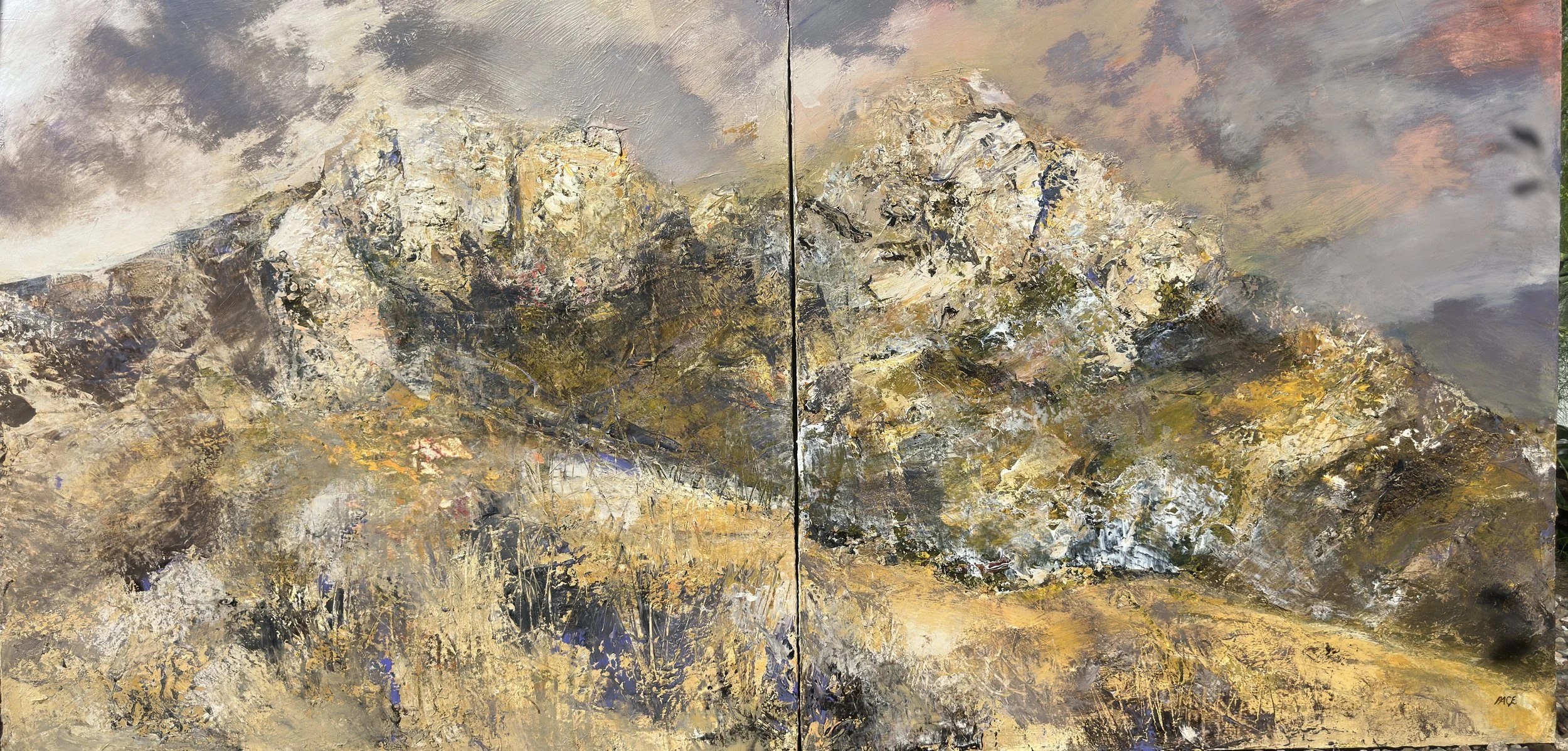
Cobbler
1000 × 2000 Acrylic on Canvas
This opening up of walking and climbing possibilities post-dated the pioneering activities of a more privileged group of climbers, among whom two stood out: Hugh Munro and James Bryce. James Bryce was a liberal politician, Member of Parliament, and early campaigner in the 1880s for the right to roam. The Times on March 25th, 1884, summed up what his Access to Mountains (Scotland) Bill was against:
‘Many thousands of tourists go northward every year in quest of beautiful scenery. They are confronted with a fortification of strong fences, and locked gates, resolute gamekeepers, men of action, and the terrors of the law. His unique idea did not become law but laid the foundation for the efforts of others to put into statute his vision.’
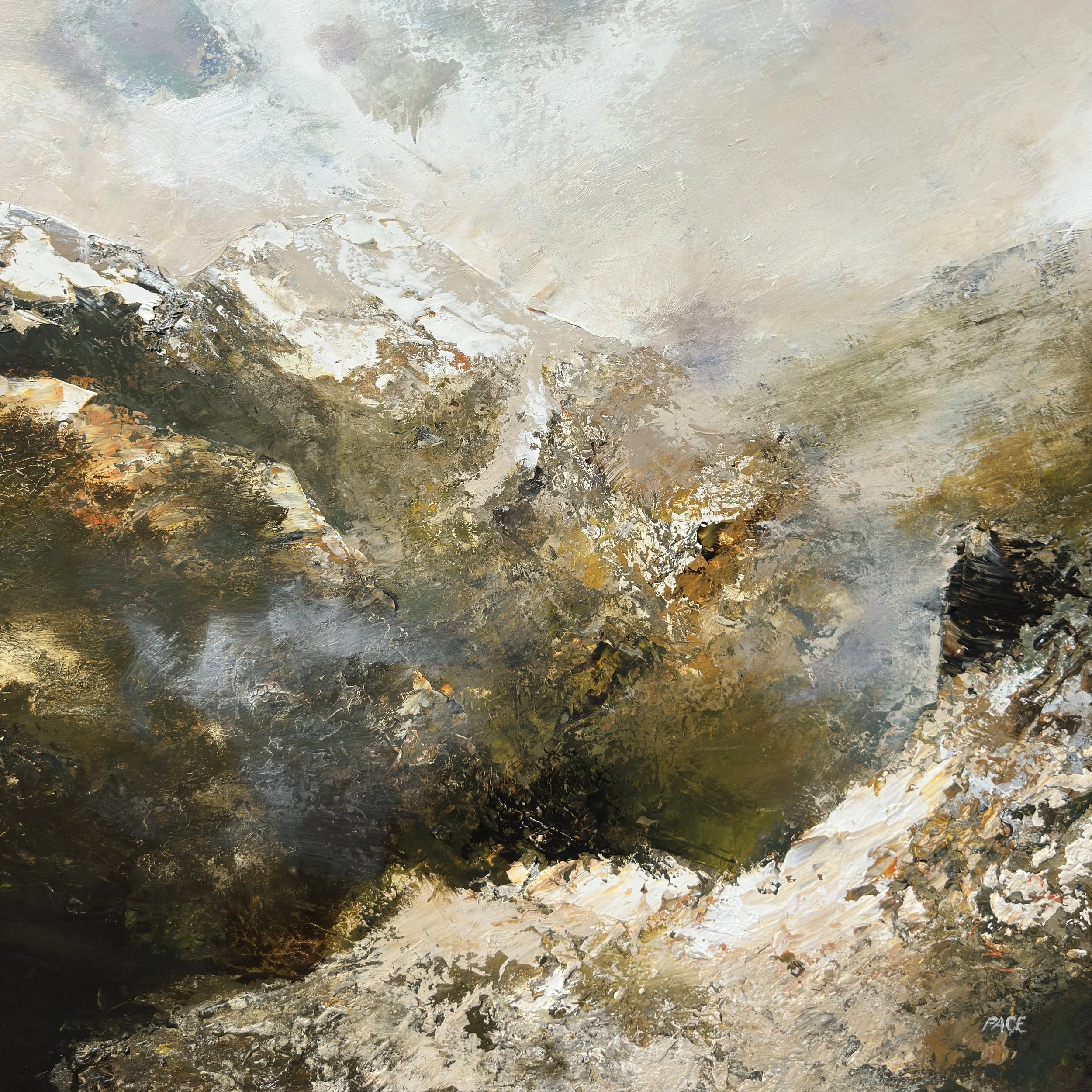
Ben Vane
1000 ×1000 Acrylic on Canvas
It didn't win enough support to get onto the statute book. But in parallel, others continued to popularise the idea of walking and climbing. Hugh Munro was tasked by the Scottish Mountaineering Club in the 1890s to classify hills above 3,000 feet into a set, which in turn has become a collector's item. Munro bagging was born, followed by new collections: the Grahams-named after Fiona Torbet (née Graham) who compiled the list with Alan Dawson, with heights between 2,500 and 3,000 feet; the Donalds-originally focused on Percy Donald's Lowland Hills between 2,000 and 2,500 feet; and the Hughs - the smaller hills up to 2,000 feet drawn up by Andrew Dempster as Hills Under Graham Height," with a commemorative nod to Hugh Munro's grander peaks.
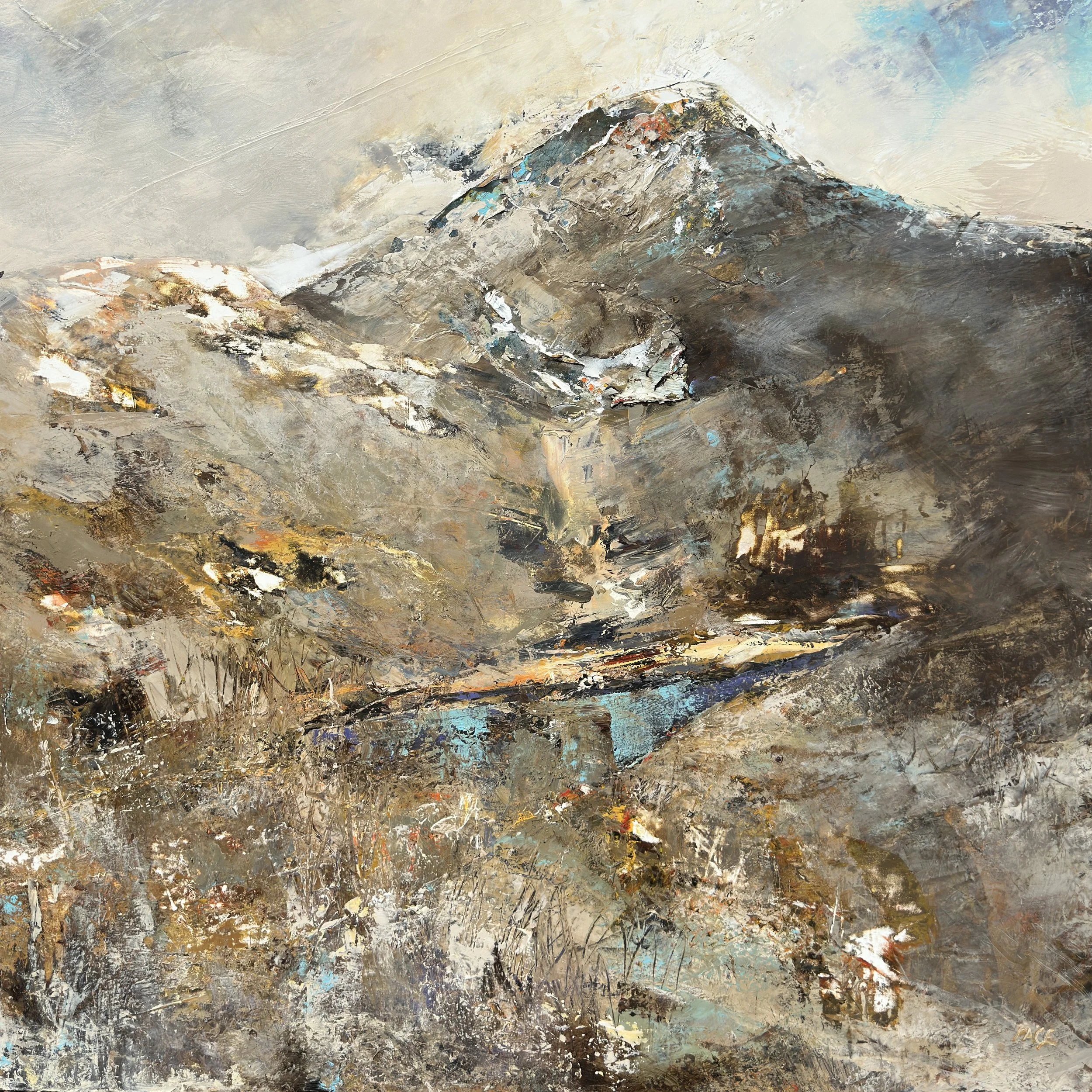
Ben Ime
1200 × 1200 Acrylic on Canvas
A consequence of this interest in walking and climbing was the explosion of climbing clubs in the 1920s and '30s, no better captured than in an image of an enthusiastic Junior Mountaineering Club of Scotland meet sheltering under the Narnain Boulder, which remains a popular stop on the climb up to the Cobbler to this day.
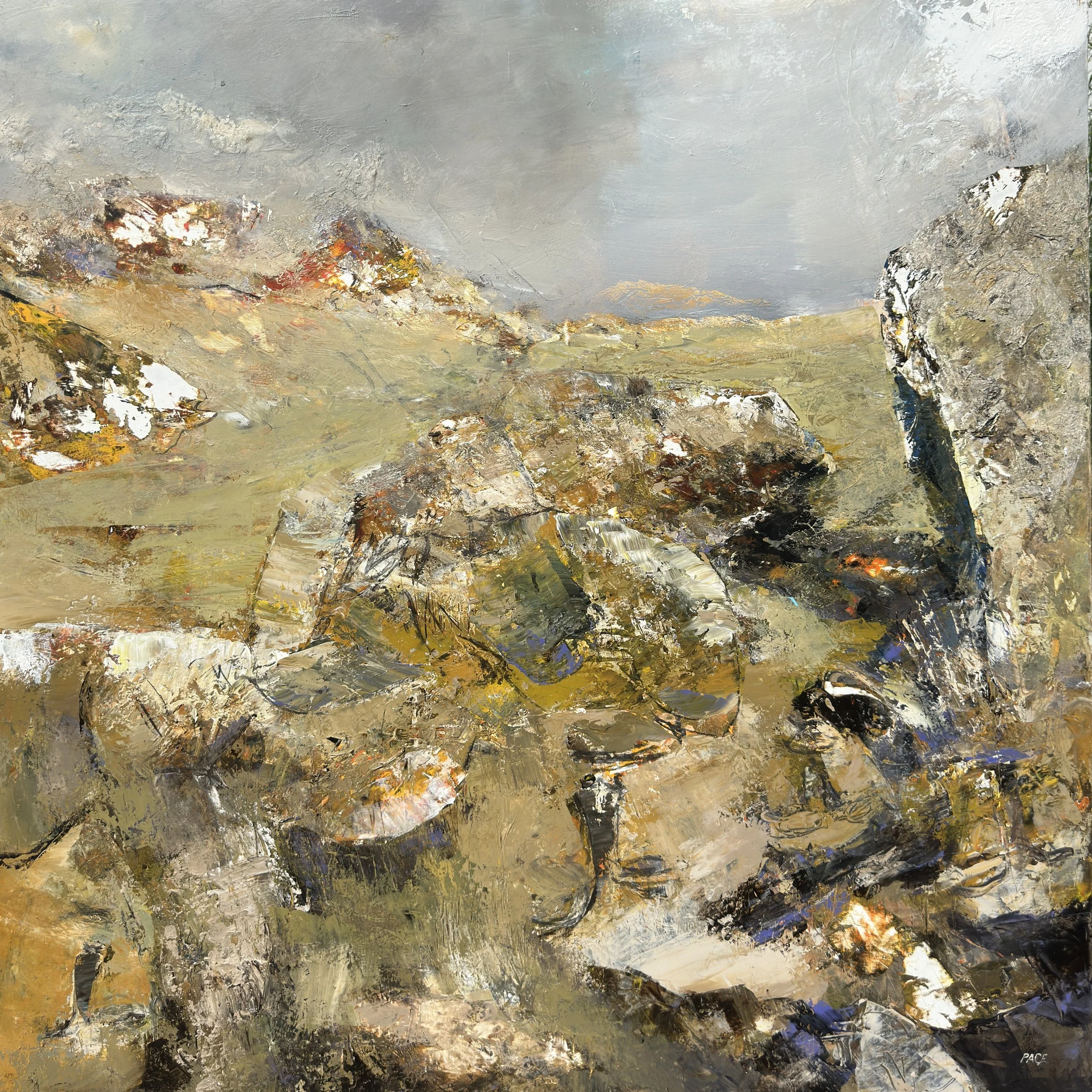
Narnain Boulder
1500 × 1500 Acrylic on Canvas
A number of these clubs broke with precedent, exploding the demographic of participation to include a whole new group of walking and climbing enthusiasts. These were people who worked long hours on the shop floor and in factories, leaving for the hills for a Sunday's climb on late-night Saturday buses. For many, the opening up of the hills was supported by the penetration of the car into the lives of those who could afford it. But for this working generation, such luxury was out of reach, and apocryphal stories emerged of the steps they would go to just to get to the hills:
‘One bus got to Balmaha for midnight. From there we could reach Rowardennan before 2 a.m., but sometimes we arranged for a rowing-boat to be ready at Balmaha jetty and rowing with two pairs of oars in two-hour shifts we would cover the fourteen. miles to Tarbet by 4 a.m., snatch a few hours' sleep under the trees and walk to Arrochar for a fair day's climbing before facing the return trip to Balmaha.’
Jock Nimlin was royalty in this working fraternity; his tales of getting to the hills are legend, as captured above and in his later reminiscences recorded by I.D.S. Thomson's book about the climber, ‘May the Fire Be Always Lit.’
Nimlin's diary of Sunday, 27th July 1930 notes:
‘Left for Helensburgh with Dougan and Hunter. Slept in car at Rhu. Climbed on to railway. Had some fun with detonator. Late arrival Arrochar. Left 3.30. Climbed Cobbler N. Peak by Maclay's Crack. Rush for late bus. Milguy and home.’
It is doubtful it was their car, and going onto the railway line would be their walk from Rhu overnight along the railway sleepers to Arrochar-about fifteen miles, leaving Rhu at 3:30 in the morning.
Nimlin's diary entries are not feather-bedded; his writing blends his hardiness on the rocks with a spongy, heather-like reminiscence of japes and (mis)adventures encountered on the way. No class or ownership model could deny his grit nor wit.
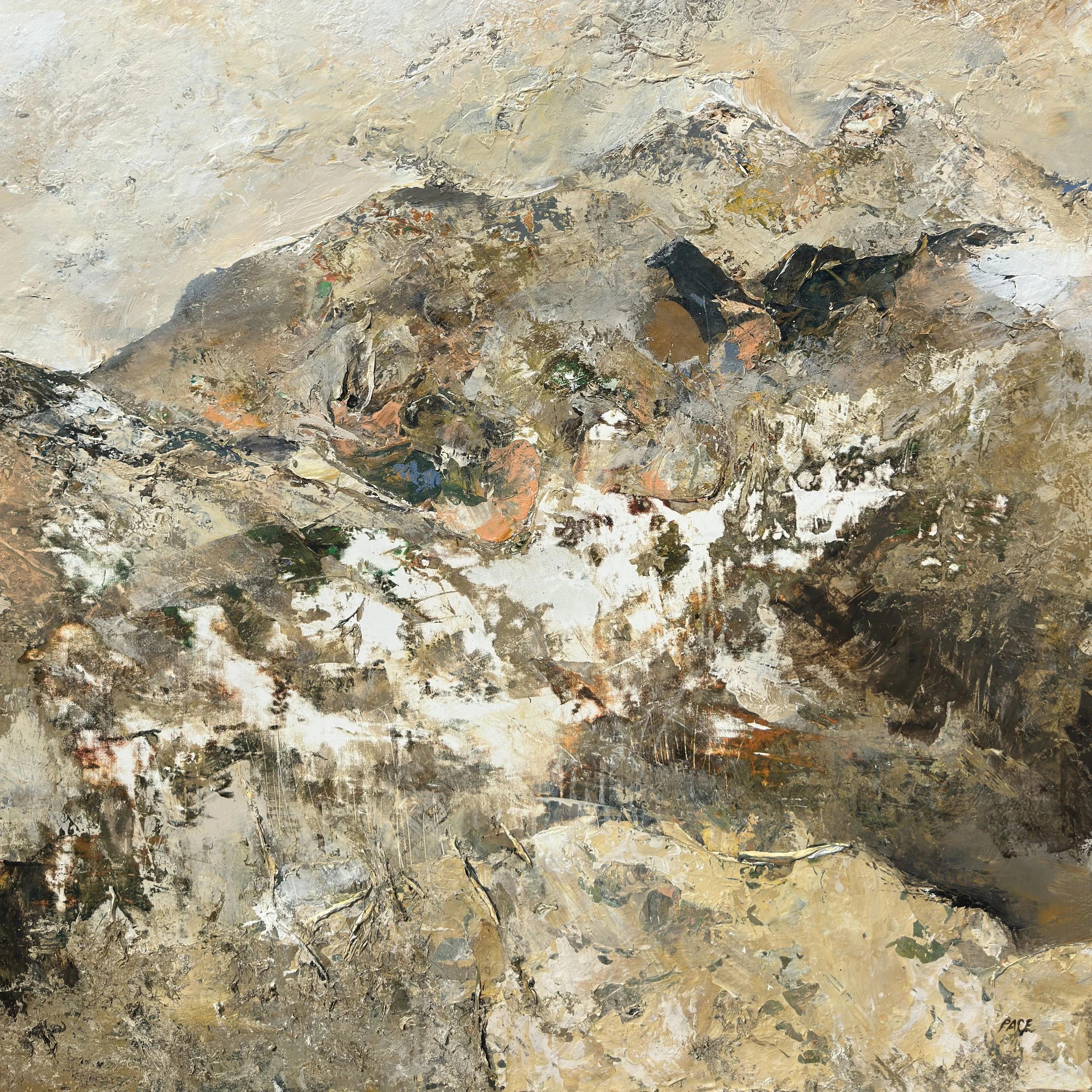
Arrochar Alps
1000 × 1000 Acrylic on Canvas
While the privileged and the less so do not seem to have found much accommodation in those early days of mass access to the countryside, that was going to change post-Second World War. Thomson writes of a sea change by the Scottish Mountaineering Club: During and immediately after the Second World War the SMC, which had hitherto drawn its membership from the privileged classes, opened its doors to members from the working class." It was in those '30s that an important foundation was being laid that would in time bridge that divide and nurture access to the countryside for future generations, rooted in new ways of communication through films by fellow climbers like Ben Humble and curiously in other fields altogether such as strategic land planning. Nimlin and an apprentice engineer named Bob Grieve met for the first time at an unoccupied cottage for a climb, no doubt up Ben Lomond. Jock and his friends lit up a newspaper in the middle of the night, shouting "fire, fire!" to bring a sleeping-bagged Grieve tumbling out of the roof rafters.
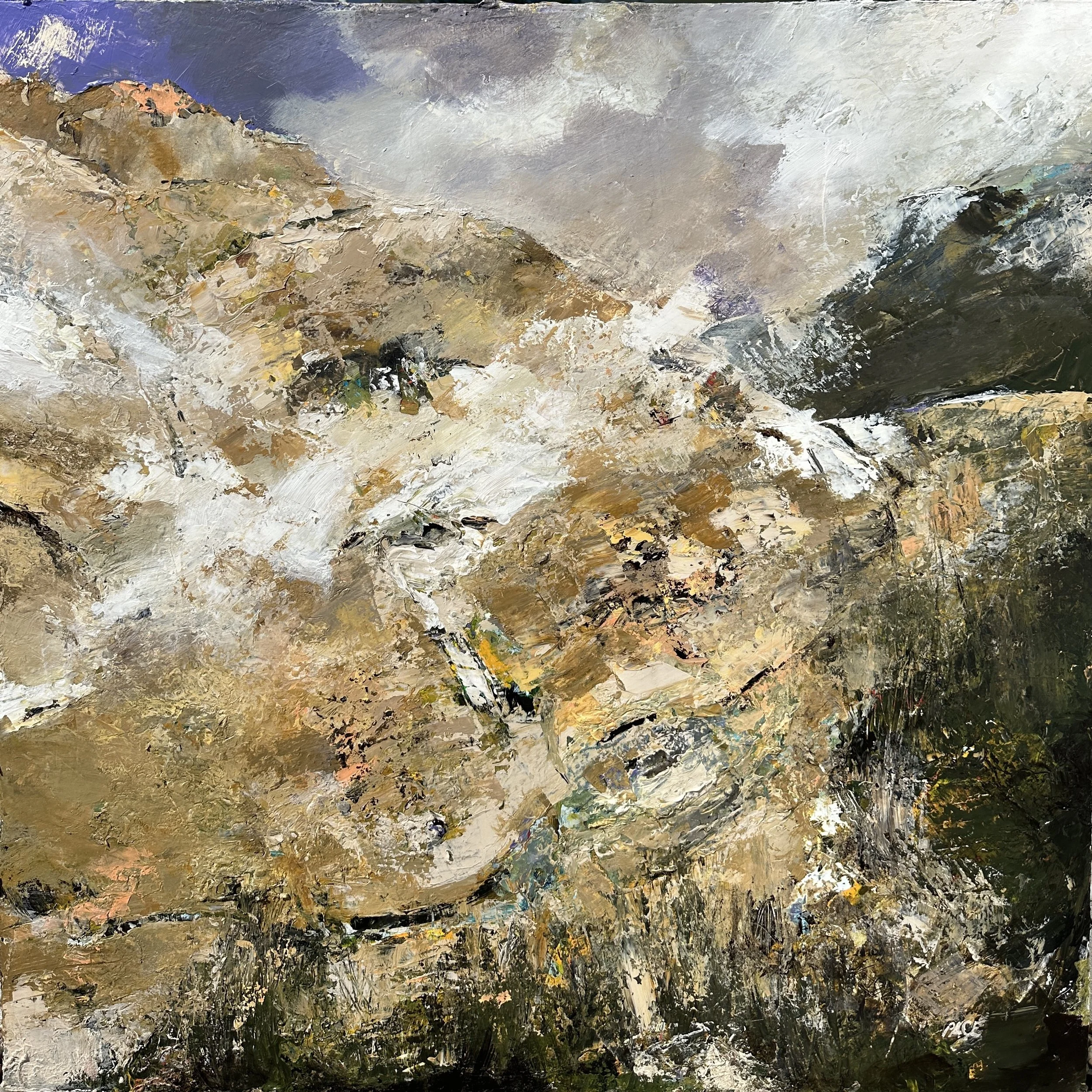
Beinn an Lochain
1000 × 1000 Acrylic on Canvas
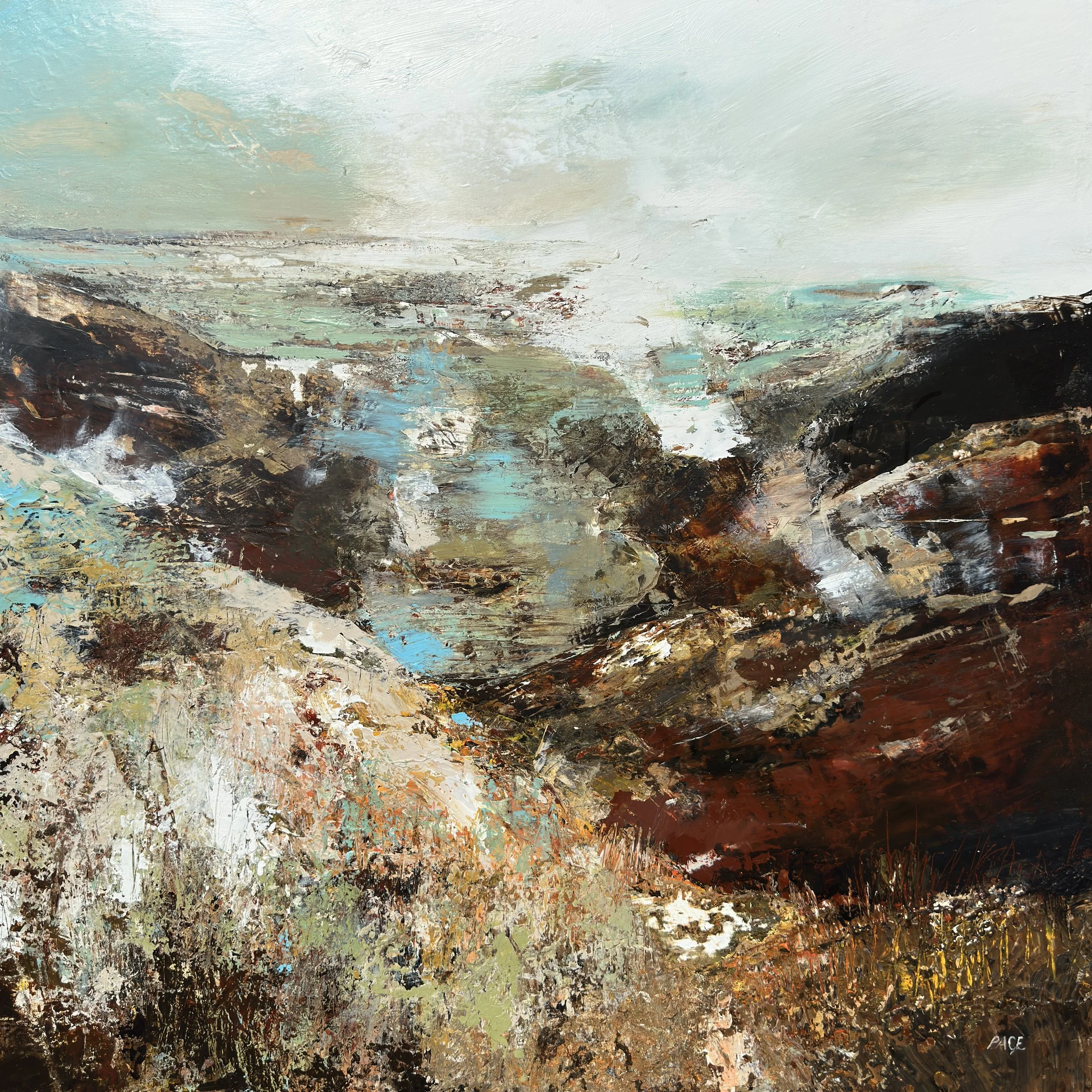
Ben Vorlich
1000 × 1000 Acrylic on Canvas
Grieve's pioneering contribution to the postwar Clyde Valley Regional Plan on recreation and leisure cemented his early and continued experiences on the hills with a vision for opening up the landscape to a densely packed Glasgow conurbation. Grieve used the plan to argue that the geographic corridor from Balloch (the southern gateway) up through the lochside to Arrochar (the mountainous highland edge) was a ‘superb piece of Highland wilderness" that belonged to the citizens of Clydeside for recreation. Where Balloch northwards to Drymen was planned for bungalow and incremental development, Grieve's plan conceived it as open recreational space and the foundation of the National Park.
It is hard to imagine that his early forays into that landscape did not shape his life's mission. A by-product of the intensity of his application was seen in his known meticulous field mapping carried out on the plan, which later fed into his work with ScotWays (the Scottish Rights of Way and Access Society)-an organisation he joined in 1949 and eventually led as Honorary President to legally protect historic walking paths from developers and set concrete foundations for the future Right to Roam legislation.
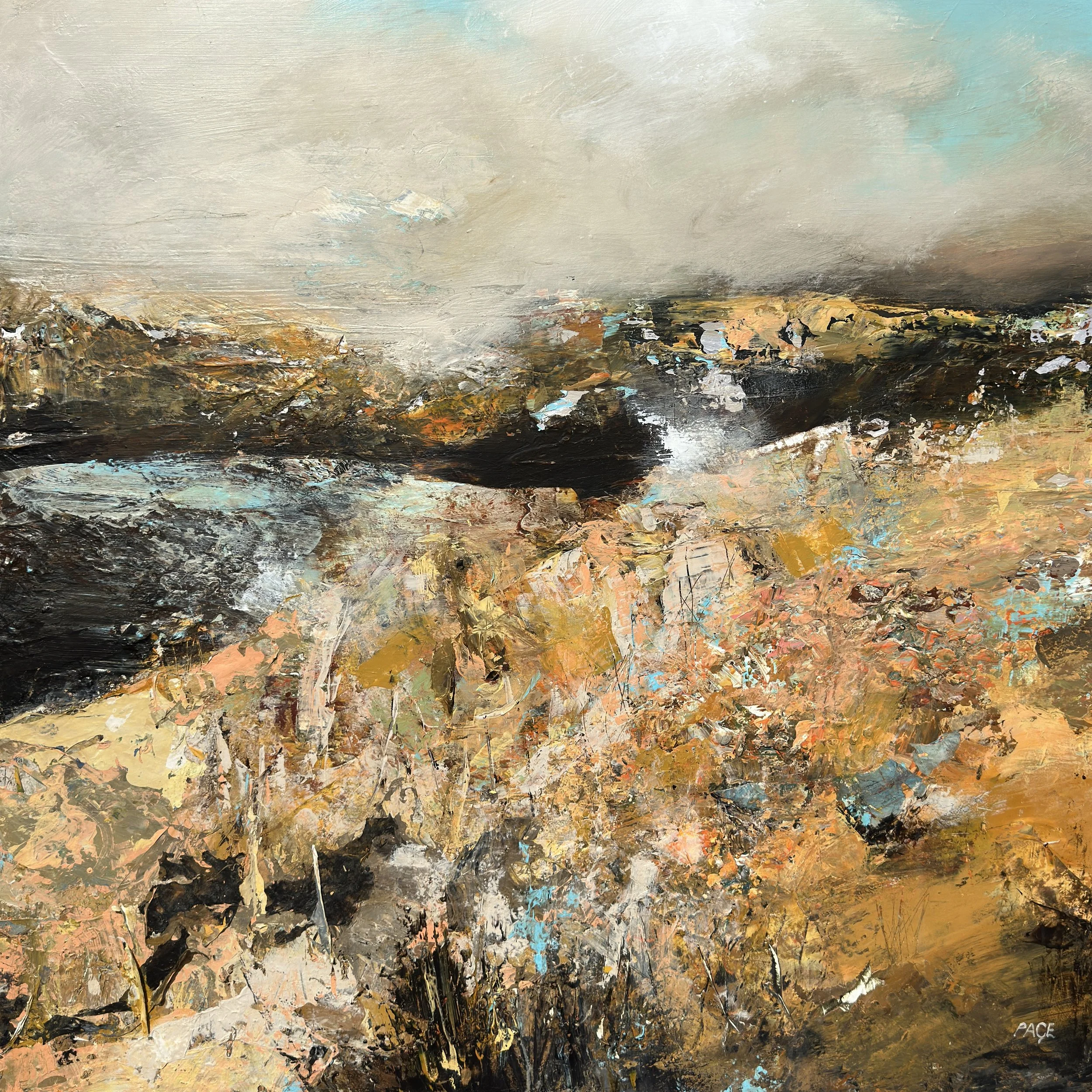
Old Friend
1000 × 1000 Acrylic on Canvas
He too perhaps set in place in Scotland the idea of landscape architecture as a blend of planning and design that should accompany all strategic and development thinking. A beneficiary of his teaching was lan White, a landscape architect who espoused the virtues of logical, big-scale planning thinking blended with a detailed understanding of the ecology of each setting. In many ways, forty years later, he enacted the Grieve plan at Balloch as a gateway to that Arrochar wilderness, rationalising the intersection of the mechanics of car access with a framing of the landscape being given access to. It was a project I worked on too.
Enjoyment of the landscape and development didn't need to collide in lan's view it you planned it properly. Stirling Maxwell, a founder of the National Trust, was part of a Patrick Geddes lineage who studied cities in their broader landscape context, as did Grieve and White.
Maxwell decried the new road to Glen Coe, preferring the wildness to be retained. Grieve and White would likely have taken a more planned, conscious view to do it well in both broad and detailed terms.
This commentary started with Alastair Borthwick's opening lines in Always a Little Further, and fittingly, as we come back down the hills, it finishes with his last words:
...’ [climbing] to my mind it finds its chief justification as an antidote for modern city life, where we live on wheels and use our bodies merely as receptacles for our brains.
Many people rate against city life; but I must confess that it suits me very well. It exercises my brain. It also fills my brain, as it fills the brains of everyone, with a multitude of petty worries. One cannot sweat and worry simultaneously. The mountain resolves itself into a series of simple problems, unconfused by other issues. Its problems are solid rock, to be wrestled with physically; and in the sheer exuberance of thinking through his fingers and toes as his primeval fathers did before him the climber's worries vanish, sweated from his system, leaving his brain free to appreciate beauty.’
